If you’ve ever stood in the cleaning aisle at a hardware store, staring at rows of surface cleaners and wondering if that bottle under your sink is safe for your quartz kitchen countertops or marble bathroom vanity, you’re not alone. As a surface cleaner supplier who’s spent the last 12 years talking to homeowners, contractors, and small café owners every single week, this question is the one I get asked more than any other—aside from “do you have bulk pricing for restaurants?” Let’s cut through the marketing hype, the old wives’ tales, and the conflicting online reviews to talk about the science, the common mistakes, and what actually works when it comes to cleaning countertops. Surface Cleaner

First, let’s get one thing straight: not all surface cleaners are created equal. I know that sounds like a generic sales pitch, but it’s rooted in real chemistry. Every countertop material has a unique structure, and a chemical that’s safe for one could ruin another in a heartbeat. I’ve seen it happen firsthand. Three years ago, a regular customer who runs a family pizza place in downtown Portland bought a discount all-purpose surface cleaner from a big-box store to wipe down their quartz prep counters. A week later, he called me panicking because the sealer on the edges of his counters had bubbled, and the food-safe coating that kept pizza sauce and grease from sticking was etched. It turned out the discount cleaner had a higher pH level than what’s recommended for quartz, and when it sat in the cracks between counter tiles for too long, it broke down the sealer. That moment solidified why I don’t just sell surface cleaners—I help people match the right cleaner to their countertop, because getting that wrong isn’t just a hassle, it’s a costly mistake.
Let’s break down the most common countertop materials and what surface cleaners work (and don’t work) for each, because that’s where most people go wrong. Starting with the most popular kitchen countertop in North America right now: quartz. Quartz is an engineered stone made of 93% natural quartz crystals and 7% polymer resin binders, so it’s non-porous, which is a huge plus for kitchens. That means it resists stains, but the resin binder is sensitive to harsh chemicals. Acidic cleaners—think things with lemon, vinegar, or citrus extracts, or cleaners with a pH higher than 10—can dull the resin over time, leading to streaks and even permanent discoloration if used repeatedly. For quartz, I always recommend a neutral-pH surface cleaner (pH 7, plus or minus 1) formulated to be food-safe. Avoid anything labeled “heavy-duty degreaser” or “bathroom cleaner,” as those almost always have high pH levels meant to cut through soap scum in tile grout, not gentle enough for quartz resin. I also tell people not to use abrasive scrubbers on quartz, even with the right cleaner—those little steel wool pads or plastic scrub brushes with stiff bristles can scratch the surface, so a soft microfiber cloth is your best bet.
Next, the material that trips people up more than any other: natural stone, like marble, granite, or soapstone. These are porous, made of mineral crystals, and they need a penetrating sealer to protect them from stains. That sealer is the key here. Most surface cleaners on the market are designed for non-porous surfaces, so they often have surfactants (the cleaning agents that lift dirt) that are too harsh for unsealed or even lightly sealed natural stone. Acids are the enemy here, full stop. Vinegar-based cleaners, lemon juice, even some all-purpose surface cleaners labeled “natural” with citrus extracts will etch marble and granite. Etching isn’t a stain—it’s a chemical reaction that dissolves the mineral in the stone, leaving a dull spot that can’t be buffed out. I had a customer a few years ago who swore by her grandma’s old cleaning recipe of vinegar and water for every surface, and she ruined her $10,000 marble kitchen island in six months. The good news? If your natural stone is properly sealed (every 1-2 years, depending on use), a pH-neutral, stone-specific surface cleaner will work perfectly, lift food residue and grease, and won’t damage the sealer. The bad news? Generic surface cleaners that aren’t formulated for stone are a no-go here, even if they say “mild” on the label.
Then there’s laminate countertops, the workhorse of rental properties and budget kitchens. Laminate is a thin plastic layer bonded to particleboard, so it’s very non-porous, but the plastic layer is easily scratched and damaged by heat. Many generic surface cleaners are safe for laminate, but again—avoid anything abrasive, and don’t use a surface cleaner designed for grease-cutting that has harsh solvents, like acetone or ammonia. Those can melt the laminate surface over time, leaving a cloudy, sticky residue. I always tell people with laminate to test a small, hidden spot first—like inside a cabinet or on the back edge of the counter—before using a new surface cleaner, just to make sure it doesn’t cause discoloration.
Solid-surface countertops, like Corian, are another common one. They’re made of acrylic or polyester resin, so they’re flexible, non-porous, and resistant to most stains. Surface cleaners formulated for solid surface should be non-abrasive, but most standard neutral-pH surface cleaners work great here. The only thing to watch out for is paint or glue—some surface cleaners won’t lift cured adhesive, but that’s a separate issue from regular cleaning.
Now, the big question: can you use a generic all-purpose surface cleaner on all countertops? The short answer is no, but the slightly longer, more useful answer is: sometimes, if you read the label and test it. I know it’s tempting to grab that $3 bottle of all-purpose surface cleaner because it’s in your pantry, but that’s where most homeowners get into trouble. Let’s talk about label reading, because that’s the part no one tells you about. A surface cleaner’s label will list pH levels (usually 1-14, with 7 being neutral) somewhere, even if it’s in tiny print. If it’s for bathroom use, it’s probably acidic (pH 2-5) because it cuts through soap scum. If it’s labeled “heavy-duty” or “commercial degreaser,” it’s likely alkaline (pH 10-14) to break down thick grease in industrial kitchens. If it says “pH-neutral,” “for all surfaces,” or “food-safe,” that’s a good place to start—but even then, test it first.
Testing is the step most people skip, and it’s the simplest way to avoid damage. Here’s how I teach every customer to test a new surface cleaner: grab a cotton swab, put a tiny drop of the cleaner on an inconspicuous spot (like the back of the counter, under the sink, or on the inside of a counter edge), let it sit for 10 minutes, then wipe it off and check for discoloration, dullness, or etching. If nothing happens, it’s safe to use. If it looks off, don’t use it on the rest of your counter. It takes two minutes and saves you hundreds of dollars in repairs.
Over my years in this business, I’ve also noticed a lot of confusion between “disinfectant surface cleaners” and “regular surface cleaners.” Many homeowners want their countertop cleaner to kill germs, especially after raw meat or when someone is sick. That’s a totally valid concern, but not all surface cleaners are formulated to be disinfectants. If you need a cleaner that both cleans and kills bacteria, look for one that’s registered with the EPA as a disinfectant, and again, check the label for what surfaces it’s safe for. For example, some EPA-registered disinfectants are safe for quartz and laminate, but not for unsealed marble—always cross-reference the disinfectant’s approved surface list with your countertop material.
I’ve had customers ask me in the past, “Can I just use water and a microfiber cloth? That’s simpler.” And sure, water works for light messes, but for grease from cooking, coffee stains, or food residue, you need a small amount of a gentle surface cleaner to cut through that buildup without damaging your counter. The key is balance: you don’t need a harsh, heavy-duty cleaner for every wipe, but using the right mild, surface-specific cleaner will keep your countertops looking like new for years.
Let’s talk about some common myths I’ve heard over the years, because those can lead to bad decisions. Myth #1: “All natural surface cleaners are safe for all countertops.” I can’t tell you how many times someone has come to me with a bottle of “plant-based” cleaner made with vinegar or lemon oil, thinking it’s safe for marble. Those are natural ingredients, but they’re acidic, and they will etch and stain natural stone. Just because something is “natural” doesn’t mean it’s gentle on every surface. Myth #2: “The more powerful the surface cleaner, the better.” No—for daily cleaning, a milder surface cleaner is better, even if you have a stain. For tough stains, like red wine on a counter, it’s better to treat the stain with a poultice (a paste that draws the stain out) instead of scrubbing with a harsh surface cleaner, which will damage the counter around the stain as you work. Myth #3: “Sealed countertops mean you can use any surface cleaner.” Sealed natural stone has a protective layer, but that layer isn’t invincible. Over time, harsh cleaners will break down the sealer, so you’ll need to reapply it more often, or even replace the sealer early, which costs more than using a gentle surface cleaner in the first place.
As a surface cleaner supplier, this is what I want people to take away: using a surface cleaner on your countertops is totally fine, as long as you match the cleaner to your countertop material, read the label, and test before you use it. It’s not about avoiding surface cleaners altogether—it’s about using the right one. I’ve seen homeowners save thousands of dollars in countertop repairs just by switching from a generic all-purpose cleaner to a surface cleaner formulated for their specific stone or engineered material. I’ve also seen small restaurants save money by buying bulk, food-safe surface cleaners that work for all their prep counters, saving them from having to buy multiple bottles for different areas.
If you’re unsure about what surface cleaner is right for your countertops, or you’re looking for bulk supplies for your home or business, I’m here to help. I’ve spent a decade learning the ins and outs of countertop care and surface cleaner formulation, and I’m happy to answer any questions, recommend the right products, or walk you through testing a cleaner to make sure it’s safe for your space. There’s no one-size-fits-all answer to this question, but with a little knowledge and the right product, keeping your countertops clean and in great shape is simple.
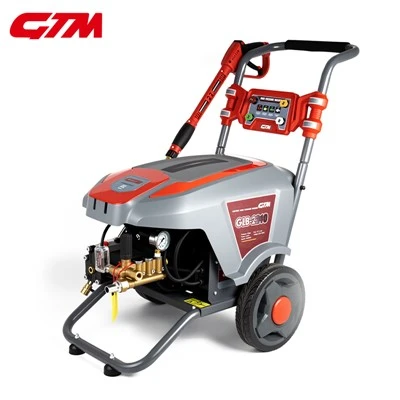
When you’re ready to discuss your needs, don’t hesitate to reach out for a procurement conversation. We can tailor solutions to fit both residential and commercial requirements, ensuring you get the right surface cleaner for your countertops without unnecessary costs or risk of damage.
Surface Cleaner References
- Tuck, C. (2021). “Countertop Material Care Guide.” Stone World Magazine.
- American National Standards Institute (ANSI). (2019). “Standard for Surface Cleaners for Non-Porous Engineered and Natural Stone.”
- Environmental Protection Agency (EPA). (2022). “Disinfectant Product Approval List for Hard Non-Porous Surfaces.”
- International Association of Home Inspectors (IAHI). (2020). “Common Countertop Damage and Preventative Cleaning Practices.”
Zhejiang GTM Hi-Tech Intelligent Equipment Co., Ltd.
We are one of the most experienced surface cleaner manufacturers and suppliers in China, also support customized service. Please feel free to buy discount surface cleaner for sale here from our factory. Quality products and reasonable price are available.
Address: No.5 of Changjiang Road, 2nd Economic Development Zone of Wenling, Zhejiang, China
E-mail: yehuanting1@hongyemfg.com
WebSite: https://www.gtmplungerpump.com/
