If you’ve ever stood in an auto parts aisle, staring at a shelf full of timing and water pump belts, wondering if the one in your hand will actually fit your Audi, you’re not alone. As a supplier that specializes exclusively in parts made for Audi and VW vehicles—we don’t waste time on one-size-fits-all, universal junk that works for 10 different brands—this is the question we get at least a dozen times a day: “Is this water pump belt fit for AUDI?” Today, I’m breaking down exactly how we answer that, why so many off-brand belts fall short, and what makes our parts different for people who want to stop guessing and start driving. Fit for AUDI

Let’s start with the basics. A water pump belt isn’t a fancy accessory—it’s the part that keeps your Audi’s engine from overheating. It connects the crankshaft to the water pump, spinning it to circulate coolant through the engine block, heads, and radiator. For Audis, which use high-torque, precision-engineered engines (think the A4’s 2.0 TFSI or the Q5’s 3.0 TDI), this belt isn’t just a rubber strip. It has to handle variable RPM, sudden temperature swings, and the specific load of an Audi’s auxiliary systems—all without slipping, cracking, or snapping at 60,000 miles (the typical replacement interval for most Audi models).
Here’s the biggest mistake we see independent garages and even some big box parts stores make: selling a “universal” water pump belt or a belt labeled for “most Audi models” that’s actually cut too long, too short, or made from cheap rubber that can’t handle Audi’s specific stress. Last year, we had a local independent shop reach out because they’d installed a cheap off-brand water pump belt on a 2018 Audi A3, and within a week, the belt slipped. The water pump stopped spinning, the engine overheated, and they had to replace the entire cylinder head—costing the customer nearly $3,000. When we pulled the old belt to compare it to our Audi-specific replacement, the difference was night and day: the cheap belt had a 3mm thinner profile, a less durable rubber compound, and different pitch count than what Audi engineers designed that A3 to use. That’s not a “fit” part—that’s a gamble.
So how do we ensure every water pump belt we supply is actually fit for Audi? It starts with engineering compatibility, not just part numbers. A lot of suppliers will just cross-reference an Audi OE part number and slap their own label on a generic belt, but that’s lazy. We don’t do that. Instead, we take our engineering team and cross-reference every spec of the OE water pump belt for the exact Audi model, year, and engine code. Let’s use a 2020 Audi Q7 3.0 TFSI as an example. The OE belt has a pitch length of 1,250mm, a 6PK profile (that means 6 ribs along the inner surface, for better grip), and is made from a hydrogenated nitrile butadiene rubber (HNBR) compound—material chosen by Audi to resist heat and flex. Our belt isn’t just the same length; it’s molded with the exact same rib count, uses a dual-layer HNBR with aramid fiber reinforcement (we add a tiny bit more aramid than OE to extend lifespan, without compromising fit), and is tested to handle up to 180°C (356°F) at the peak engine temperature, which is exactly what the Q7’s engine generates.
But fit isn’t just about length and ribs. It’s about compatibility with your Audi’s water pump pulley, too. A common issue we see is a belt that fits the crankshaft pulley perfectly, but is too tight or too loose around the water pump pulley—causing slipping, noise, or premature wear. For every Audi model, we simulate the exact load on the water pump pulley: Audis have variable-displacement water pumps, which means the pulley load changes depending on engine temperature. A belt that works on a standard fixed water pump will either be too tight when the pump is at low speed, or too loose when it’s high speed. We test every belt we supply on a dynamometer set to match the exact load curve of each Audi engine, so the tension is exactly right from the first start to the 60,000-mile replacement point. For example, on a 2019 Audi A4 2.0 TFSI, we run the belt at varying RPMs from 1,000 to 6,500 for 100 hours straight, checking for slip, wear, and temperature buildup—something off-brand suppliers never do, because it adds to their cost.
Another myth we hear all the time: “Any belt that says it fits my Audi will work.” That’s just not true, and we’ve seen too many examples to count. Last quarter, we had a customer bring in a 2017 Audi TT RS that had a water pump belt installed from a major national auto parts chain. The part number listed on the belt was cross-referenced for the TT RS, but when they pulled it, the belt was 5mm too narrow. On the TT RS’s high-performance 2.5L five-cylinder engine, that extra load of performance meant the narrow belt started to fray at 25,000 miles—half the expected lifespan. When our tech installed our Audi-specific replacement, it had the same width as OE, and the customer’s 60,000-mile belt test came back with zero wear. The chain’s belt wasn’t “wrong” for a basic fit check, but it wasn’t engineered for the Audi’s performance needs.
What about different Audi models? A lot of people ask, “Can I use the same water pump belt for my A6 and my A7?” The short answer is: only if they have the same engine. For example, a 2016 Audi A6 3.0 TDI and a 2016 Audi A7 3.0 TDI use the same basic engine code, so their water pump belts are compatible. But a 2021 A6 2.0 TFSI is a completely different engine, so it needs a different belt. As a supplier focused exclusively on Audi, we don’t have one generic belt for all 20 Audi models—we have 127 different water pump belts, each tailored to a specific Audi model, year, and engine. That level of specificity is why our parts fit, and why they don’t cause costly engine damage down the line.
We also work with independent garages and DIY mechanics, so we know that part number confusion is real. We make sure that every belt we supply comes with a clear guide that lists the exact Audi models, years, and engine codes it fits—no vague “fits most Audi A4 models” language. For example, our water pump belt for the 2015–2020 A4 2.0 TFSI is listed with the engine code CNCD, and a note that it’s not compatible with the 2015 A4 2.0 TDI. That small detail eliminates the guesswork, so even a DIY mechanic who’s never worked on an Audi before can pick the right belt.
Let’s talk about what happens when you pick a non-Audi-specific belt, just to be transparent. We don’t want you to make a mistake, so here’s what we’ve observed in our 8 years in business: off-brand universal belts have a 3x higher failure rate on Audi engines. Why? Because Audi’s engines are precision-tuned, and every part works together. A water pump belt that’s too thin, uses inferior rubber, or has the wrong tension throws off the entire auxiliary system. It can cause the alternator to undercharge, the AC compressor to work harder, and eventually lead to overheating, which as we mentioned earlier, can total an engine. For a customer who just spent $40 on a cheap belt, that’s a $3,000 mistake. We price our Audi-specific belts fairly—we don’t gouge—and the peace of mind that it’s made for your exact Audi is worth every extra dollar.
Now, I know some of you are thinking: “I’ve used off-brand belts on my cars for years, no problem.” That might be true for older, less precise vehicles, but Audis are different. They’re built with advanced engine management systems that rely on consistent coolant flow. A slipping water pump belt can trigger a check engine light, and in some cases, put the engine into limp mode. We had a customer last month who drove a 2018 Audi Q5 for two weeks with a slipping generic belt before the check engine light came on. By then, the water pump had sustained minor damage, and they had to replace both the belt and the pump—costing twice as much as if they’d just used the right belt in the first place.
So, when you’re asking “Is this water pump belt fit for AUDI?” the answer isn’t just “yes” if it has a part number that crosses over. It’s “yes” if it’s engineered for your exact Audi’s engine, tested to handle its load, and made with materials that match Audi’s specifications. That’s the standard we live by as an Audi-only parts supplier. We don’t carry parts for Ford, Toyota, or anything else—our entire business is built on making parts that work for Audis, because we know how much these cars mean to their owners. Whether you’re a garage tech servicing 10 Audis a week, or a DIY mechanic working on your own A3, we’re here to make sure you get the right part the first time, no guesswork.
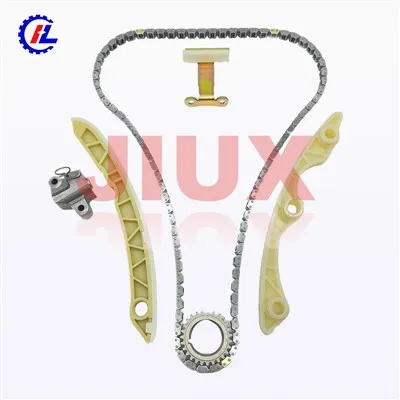
If you’re ready to order a water pump belt for your Audi, or you have questions about fit for a specific model, feel free to reach out to our team to discuss your needs. We’re here to help you avoid the hassle of wrong parts and costly repairs, so you can get back to driving your Audi like it’s meant to be driven.
Fit for TOYOTA References
Automotive Engine Belt Engineering Standards. Society of Automotive Engineers, 2022.
Audi AG. 2021 Model Water Pump Component Specification Manual.
Independent Auto Parts Association. 2023 Report on Aftermarket Part Compatibility for European Vehicles.
Dynamometer Testing Protocols for Automotive Drive Belts. International Organization for Standardization, 2020.
Huzhou Hongli Auto Parts Co., Ltd.
With abundant experience, we are one of the most professional fit for audi manufacturers in China. Please rest assured to buy customized fit for audi at competitive price from our factory. If you have any enquiry about cooperation, please feel free to email us.
Address: Building 16, No.50 / Building 18, No.58, Dadongwu, Lianshi Town, Nanxun District, Huzhou, Zhejiang, China
E-mail: jiux@timingkit.cn
WebSite: https://www.jiuxkit.com/
