If you’re running a shop floor, whether it’s a small job shop cranking out custom metal parts or a mid-sized facility churning out high-volume automotive components, you’ve probably heard the term “servo system” thrown around a lot. Maybe you’ve even asked, “What’s the big deal? Isn’t it just part of the machining center?” Let me tell you—if you skip over the role of a good servo system, you’re basically leaving money on the table, and trust me, I’ve seen it happen way too many times as a machining center supplier. Let’s break this down like we’re chatting over a coffee during a late shop floor break, no stuffy engineering jargon that makes your eyes cross. Machining Centers
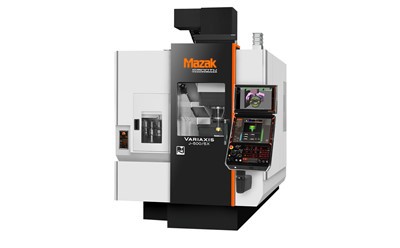
First off, let’s get one thing straight: a machining center isn’t just a metal box with a spinning cutter. It’s a system of coordinated parts, and every single movement has to be precise. When you run a part that needs a 0.001-inch tolerance, or you’re cutting a complex 3D aerospace contour, that 0.001-inch gap can mean the difference between a part that passes inspection and one that gets tossed in the scrap bin. That’s where the servo system comes in—it’s the brain and the muscle that makes every axis of your machine move exactly when, where, and how you need it to.
Let’s start with the basics of how a servo works in plain terms. Unlike the old, outdated stepper motors that just spin until they get a signal, servos are feedback-driven. Each axis on your machining center—X, Y, Z, and often the rotary axes if you’re doing 4 or 5-axis work—has its own servo motor, paired with a encoder (think of it as a super precise odometer for that axis). The encoder sends real-time data back to the machine’s controller, like, “Hey, we just moved 0.0005 inches, we need to adjust to hit 0.001 inches exactly.” No lag, no overshoot, no random “close enough” moves that mess up your part. I’ve had customers come to me with used machines that had worn-out servo systems, and the first thing we did was swap those old motors for new ones—suddenly their tolerance rates jumped 20% or more. That’s not a small win; that’s thousands of dollars in saved scrap every month.
But it’s not just about precision. Speed matters too, especially if you’re running high-volume parts. A bad servo system can’t balance speed and acceleration without stalling or vibrating. If your servo is too slow to ramp up when you need to move quickly between cuts, you’re wasting cycle time—time that adds up over a 1,000-part run. On the flip side, if it ramps too fast, you get that shaky movement that leaves tool marks on your finished part, or even worse, breaks a expensive end mill. I had a customer last year who was running aluminum engine blocks; their old machine took 12 seconds to move from one bore to the next, and the tool would vibrate so bad they had to replace a tool every 50 parts. We swapped their servos for a high-dynamic model, and they cut that move time to 4 seconds, replaced tools only every 200 parts, and got the same accuracy. They saved over $15,000 in the first quarter alone just from that upgrade. That’s the kind of tangible win that makes shop owners sit up and pay attention.
Wait, and let’s not forget about reliability. A machining center is a big investment, and downtime costs way more than just the machine itself. When a servo system fails, you’re not just waiting for a part—your operators are standing around, your production schedule is off, and you might even have to push back a delivery to a customer. A high-quality servo system from a reputable supplier (that’s us, by the way) is built to handle 24/7 operation, the heat and dust on a shop floor, and all the heavy loads that come with cutting steel, titanium, or Inconel. I’ve seen cheap, generic servos last a year and a half before burning out, while the servos we pair with our machining centers are still running strong after 10 years in some shops. The upfront cost is a little higher, but the total cost of ownership? It’s way lower. That’s something I always stress to customers who are trying to cut corners on parts—you pay for good servo tech once, or you pay for downtime and scrap for years.
Now, let’s talk about modern machining, because if you’re still running 3-axis parts exclusively, you’re missing out on a huge opportunity. 4-axis and 5-axis machining is where a lot of shops are heading, right? You can cut complex parts like turbine blades, medical implants, or custom aerospace components that would take multiple setups on a 3-axis machine. But here’s the thing: those extra rotary axes (the A and B axes that tilt the part, or the C axis that spins it) rely entirely on their own servo systems. If one of those rotary servos has lag or imprecision, your contour cuts will be off, and you’ll have to do extra work to fix the part, or scrap it. I worked with a medical device shop last year that wanted to switch to 5-axis machining for their hip implants. They bought a machine from a cheap overseas supplier that had generic servos for the rotary axes, and they couldn’t get the tolerance tight enough for the implant’s surface finish. They reached out to us, we swapped out the rotary servos for high-resolution models, and suddenly they were hitting the 0.0008-inch surface finish required by the FDA on their first run. That’s not just about cutting parts—it’s about being able to take on higher-margin, more advanced jobs that your competitors can’t handle.
Let’s also get real about what happens when your servo system is outdated. A lot of older machining centers have analog servo systems, which are basically the flip phones of the servo world. They’re less precise, slower to respond, and can’t handle the demands of modern CAM software that generates complex toolpaths. If you’re still running an analog servo, you’re probably fighting against your own machine—you can’t take full advantage of the parts you’re designing, you’re dealing with more errors, and you’re losing jobs to shops that have upgraded their servo tech. I see this all the time: a shop will keep an old machine running because they “don’t want to replace it,” but they’re leaving money on the table because that machine can’t produce parts as well as a newer one with digital servos. A quick servo upgrade—we offer retrofits for all makes of machining centers, not just ours—can turn that old machine into a workhorse that competes with new equipment, for a fraction of the cost.
Wait, but let’s make sure we’re not making this sound like servos are the only part of a machining center. They work with the spindle, the controller, the tool changer, all that stuff. But they’re the glue that ties it all together. If your controller is super advanced but your servos are slow, the controller can’t send signals fast enough to make the most of it. If your spindle is high-torque but your servos can’t position the cutter exactly where it needs to be, you’re wasting spindle power. I always tell customers that when they’re evaluating a machining center, don’t just ask about the spindle or the controller—ask about the servo system. Who makes it? What’s the encoder resolution? How dynamic are the axes? Those are the numbers that actually translate to how good your parts will be, and how much money you’ll make.
Let’s circle back to that shop floor perspective, because that’s what this is all about—making your job easier, your parts better, your business more profitable. I’ve had operators tell me that since we swapped their servos, they don’t have to baby the machine anymore. They can set it to run a job overnight, and when they come in the next morning, the parts are perfect, no rework, no broken tools. That’s the kind of peace of mind you can’t put a price on. Imagine not having to stay late to fix a part that got messed up because the servo drifted half a thousandth of an inch. Imagine not having to rush through a job because you’re scared the machine will stall and shut down. That’s what a good servo system delivers.
Now, if you’re reading this and you’re thinking, “Our machine is fine, we don’t need to mess with servos,” stop for a second. Have you had a job that got rejected because of tolerance issues? Have you had downtime that cost you a customer? Have you ever bid on a job and lost it because your machine can’t handle the precision or speed required? That’s where the servo system comes in. It’s not a flashy part like a new spindle or a fancy tool changer, but it’s one of the most critical parts of your machining center. It’s the reason your cutter moves exactly where it’s supposed to, why your cuts are smooth, why your parts meet specs, and why you can run jobs faster without sacrificing quality.
At the end of the day, every machining center’s performance lives or dies by how well its servo system works. I’ve been in this business long enough to see the difference between a machine that’s just metal and motors, and a machine that’s a productive, reliable tool for your shop. If you’re ready to stop leaving money on the table, reduce scrap, cut downtime, and take on more advanced jobs, it all starts with getting the servo system right for your machining center.
If you want to talk through your specific needs—whether you’re looking to upgrade your existing machine, spec out a new machining center with top-tier servo systems, or just ask questions about how servos can help your shop hit its goals—reach out. We work with shops of all sizes, from small job shops to large production facilities, and we’ll give you honest, no-fluff advice that fits your budget and your needs. No sales hype, no confusing jargon, just real solutions that make a real difference on your shop floor.
Measuring Machine References:
- "Servo Motor Control for Precision Machining," Manufacturing Engineering, Society of Manufacturing Engineers, 2021.
- "Total Cost of Ownership for Machining Center Servo Systems," Modern Machine Shop, 2022.
- "5-Axis Machining: The Role of Rotary Servo Accuracy," Aerospace Manufacturing and Design, 2023.
Hermens Industrial Co., Ltd.
As one of the most professional machining centers enterprises in China, we’re featured by quality products and low price. Please rest assured to buy cheap machining centers in stock here and get quotation from our factory. We also accept customized orders.
Address: 9/59 Moo 14, Rachathewa , Bang Phli , Samut Prakan Province 10540
E-mail: liu_jincheng@hzhemen.com
WebSite: https://www.hermensindustrial.com/
