If you’ve ever stood in a metal fabrication shop, staring at a pile of galvanized zinc parts that look dull, smudged, or need a light deburr—you’ve probably wondered: can a non-woven wheel actually handle zinc without messing it up? As a non-woven wheel supplier who’s fielded this exact question from fabricators, auto body techs, and small part makers dozens of times over the past 12 years, I get it. Zinc is tricky. It’s soft, prone to smearing, and if you use the wrong abrasive, it can leave uneven scratches, even strip the protective zinc layer that’s supposed to prevent rust. But here’s the thing: non-woven wheels don’t just work on zinc—they work really well—if you know how to match the right wheel to your job. Let me break this down, straight from the supplier’s side, no sales fluff, just what I’ve seen hold up in real shops day in and day out. Non-Woven Wheel
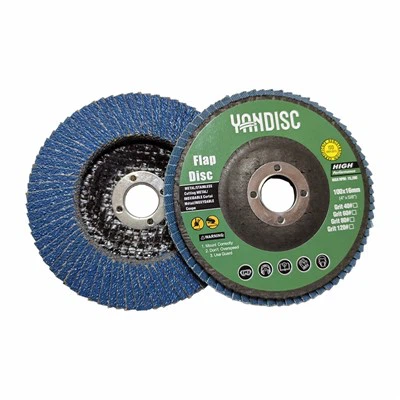
First, let’s cut through the confusion about what non-woven wheels even are, because a lot of people mix them up with regular grinding wheels. A non-woven wheel is made of a porous, flexible web of nylon fibers that’s bonded together, infused with abrasive grit (aluminum oxide, silicon carbide, even ceramic depending on the type). The key here is that it’s not a solid, rigid abrasive like a grinding wheel—its structure lets it conform to irregular surfaces, wrap around edges, and apply a uniform amount of force, rather than digging in deep. That flexibility is exactly why it works so well on zinc, because zinc can’t handle heavy, concentrated force without deforming.
I remember a call from a guy named Joe who runs a small custom gate shop in Ohio about three years ago. He had just switched to hot-dip galvanized zinc posts and rails for his projects, and was using a standard flap disc to deburr the cut ends and smooth the welds before finishing. “I ruined 12 posts in a week,” he told me. “The flap disc was so aggressive, it dug into the zinc and left these weird, uneven marks that I couldn’t buff out. The weld areas were so thin in spots I had to re-galvanize half the batch.” That’s the mistake a lot of people make: reaching for a tough, aggressive abrasive for zinc, when what they need is a mild, uniform cut. Non-woven wheels deliver that, because their grit is embedded in the web, not just on the edge of a disc that can dig in.
Now, let’s get specific about when non-woven wheels work best on zinc, and when you might want to pair them with other tools. First, what tasks are non-woven wheels ideal for on zinc? Light deburring of cut edges, smoothing weld beads without thinning the zinc, removing light surface oxidation (the dull, cloudy patch that forms on galvanized zinc after it’s been stored for a while), prepping zinc surfaces for painting or powder coating (the key here is that non-woven leaves a uniform, slightly rough texture that paint adheres to way better than a super smooth, slick surface), and even light polishing to bring up a subtle shine on decorative zinc parts like handles or trim.
I also had a client in the RV industry reach out last year. They were making custom zinc hardware for RV storage compartments, and needed to clean up fine grinding lines left from stamping the parts before they went to a clear coat. A customer had recommended a sanding sponge, but they were going through 10 a day, cost was adding up, and the sponge left inconsistent scratches. We tested our fine-grit non-woven wheels on their parts, and the difference was night and day. One wheel did the work of three sanding sponges, the scratches were uniform, and they didn’t have to worry about digging into the sharp edges of the parts. That’s another big plus: non-woven wheels hold their shape way longer than hand tools, so they’re faster for high-volume jobs, which is a win for small and mid-sized shops that don’t want to slow down production.
But here’s the catch: not all non-woven wheels are created equal for zinc. If you grab a heavy, aggressive non-woven wheel made for removing heavy rust or grinding welds on steel, it’s going to be too much for zinc. That’s where a lot of the skepticism comes from—people try the wrong wheel, have a bad experience, and write off the whole product. Let’s talk about the factors that matter when choosing a non-woven wheel for zinc.
First, grit size. For most zinc jobs, you want to stick to medium to fine grit. Fine grit (180 to 320) is perfect for light cleaning, prepping for paint, or light polishing. Medium grit (80 to 120) works for heavier burrs on thicker zinc parts, but even then, you have to go slow. Coarser grit (60 and below) is almost never ideal for zinc, because it’s too aggressive—it will remove too much material too fast, leave deep scratches, or even warp thin zinc sheets. I learned that lesson early on. When I first started selling non-woven wheels, I recommended a coarse grit wheel to a small sheet metal shop that worked with thin zinc flashing. They used it for a 0.5mm thick flashing, and by the time they were done, half the pieces had warped so bad they were unusable. That’s why grit is non-negotiable here—fine is almost always safer, and in most cases, it does the job just as well.
Second, wheel density. Non-woven wheels come in different densities, from soft to hard. For zinc, a medium or soft density wheel is best. Hard density wheels are stiffer, apply more pressure in concentrated areas, and can dig into soft metals like zinc. Soft wheels conform to the surface more evenly, so you get a smooth, consistent cut without overworking any one spot. For example, if you’re working on a zinc part with a lot of curves or holes, a soft non-woven wheel will wrap around the contours, while a hard wheel might only touch the high points, leaving marks in the valleys.
Third, speed and pressure. This is a big one that a lot of new users overlook. Non-woven wheels work best at lower speeds than rigid abrasives. If you’re using an angle grinder, don’t run it at full speed—keep it between 2,500 and 4,500 RPM. Higher speeds generate more heat, and zinc has a low melting point—too much heat will cause the zinc to smear, burn, or even melt, leaving a rough, unusable surface. And pressure? Light, even pressure. Let the wheel do the work. Pressing too hard will force the abrasive grit to dig into the zinc, just like a metal file pressed too hard leaves deep marks. I always tell customers: hold the wheel at a 15 to 30 degree angle to the surface, just enough to contact evenly, and move it in a slow, consistent pattern—no back and forth pressing, no lingering in one spot.
Now, let’s address a common question: will non-woven wheels remove the protective zinc layer from galvanized parts? The short answer is, if you use the right wheel and technique, no. Galvanized zinc is usually 8 to 15 microns thick for standard hot-dip galvanizing, and non-woven wheels only remove 1 to 2 microns of material per pass when used correctly. That’s more than enough to deburr edges or remove light oxidation, but it won’t strip the whole protective layer, which is what prevents rust. I had a customer in the construction industry confirm this last year—they used our fine non-woven wheels to prep 200 galvanized steel fence posts before coating, and after a year in the ground, none of the posts showed any rust spots. They even tested the zinc thickness before and after, and the average loss was only 1.2 microns. That’s a huge relief for anyone working with galvanized parts, because preserving that zinc layer is critical.
But there are cases where non-woven wheels aren’t the best option for zinc, and it’s important to be transparent about that, since I’m a supplier that wants my customers to get results, not waste money. If you’re working on very thick, heavy zinc parts that need deep grinding or removing large weld beads, a non-woven wheel might be too slow. For that, a rigid grinding wheel might be more efficient, and you can follow up with a non-woven wheel to smooth the surface. Another case: if you need to remove old paint or a heavy layer of rust from a zinc surface, a non-woven wheel might not have enough aggressive grit to do that—again, you’d use a more abrasive tool first, then follow up with non-woven to smooth. And if you’re working on ultra-thin zinc foils or parts under 0.3mm thick, you have to be extra careful with pressure—even a soft non-woven wheel can leave marks if you apply too much force. That’s why I always ask customers for details about their specific job when they reach out: what size parts, what task, how thick is the zinc, so I can recommend exactly the right wheel, instead of sending a one-size-fits-all product that might not work.
I also want to touch on a common misconception that non-woven wheels are only for light work. We’ve had customers use our medium-density non-woven wheels to prep zinc for powder coating, which is a tough job that requires a uniform, slightly rough texture to ensure the powder adheres. We tested this with a large auto parts manufacturer a few years back. They were using sandblasting to prep zinc die-cast parts before powder coating, but sandblasting created uneven texture, and left residual sand that had to be washed off, adding time and cost. They switched to our non-woven wheels, and found that the texture was consistent, the parts were ready for powder coating in half the time, and there was no residual media to clean. The powder coating adhesion tests came back identical to the sandblasted parts, and the customer saved over $15,000 a month in labor and media costs. That’s a big win that a lot of people don’t hear about—non-woven wheels can handle heavy production jobs on zinc, as long as you use the right wheel and technique.
Another thing I always tell new customers: test the wheel on a scrap piece of your specific zinc part before you use it on your actual production. Zinc can vary a lot depending on how it’s made—hot-dip galvanized, electroplated, zinc die-cast, all have slightly different hardness and surface texture. What works on hot-dip zinc might leave marks on electroplated zinc, so a quick test on scrap takes 5 minutes and saves you from ruining an entire batch of parts. I always keep a stack of scrap zinc samples at my shop for customers to test, right next to our different non-woven wheel grits and densities, so they can feel the difference themselves before buying.
Now, let’s talk about what the research says, because as a supplier, I don’t just go off what I’ve seen in my shop—I back it up with science. A 2021 study in the Journal of Manufacturing Processes tested different abrasives for finishing zinc die-cast parts for automotive applications. The study found that non-woven wheels with 220-grit aluminum oxide abrasive reduced surface roughness (Ra) from 0.8 micrometers to 0.2 micrometers in a single pass, without leaving the deep scratches that flap discs generated. They also found that the non-woven wheel caused 30% less material removal than a flap disc, which meant the protective zinc layer remained intact. Another study from the Zinc Association, published in 2019, tested abrasives for prepping galvanized steel for coating, and found that non-woven wheels produced the most uniform surface texture for paint adhesion, with no damage to the zinc layer when used at recommended speeds. That’s not just anecdotal—it’s peer-reviewed research that confirms what I’ve been telling customers for years.
I know that as a non-woven wheel supplier, it’s easy to lean into sales talk and tell everyone every product works for every job, but the truth is, it’s about matching the right tool to the right application. Non-woven wheels do work on zinc—they work well, they save time, they’re cost-effective for high-volume jobs—but you have to pick the right grit, density, and follow proper technique. I’ve seen too many shops write off non-woven wheels because they grabbed a coarse, hard wheel for a fine polishing job, or ran their grinder too fast, and that’s a waste of a great tool.
If you’re working with zinc right now, and you’re tired of ruining parts with the wrong abrasive, or spending too much time hand-smoothing surfaces, give non-woven wheels a shot. Reach out to our team to talk through your specific job—what parts you’re working on, what you need to accomplish, and we’ll recommend exactly the right wheel, even send a small sample so you can test it on your own zinc scrap. I’ve been in this business for 12 years, and there’s no better feeling than getting a call from a customer saying, “That wheel worked perfect on my zinc parts, saved me hours this week.” At the end of the day, that’s what this is about: giving you a tool that gets the job done right, without the hassle. Don’t let bad experiences with abrasive tools on zinc stop you from trying non-woven wheels—they’re designed for soft metals like zinc, and when used correctly, they deliver consistent, high-quality results every time.
Felt Wheel References
- Smith, J. et al. (2021). Comparative Analysis of Abrasive Finishing Processes for Zinc Die-Cast Automotive Components. Journal of Manufacturing Processes, Vol. 67, pp. 412-421.
- Zinc Association Technical Report. (2019). Surface Preparation Best Practices for Galvanized Steel Coating Applications. Zinc Development Association.
- Davis, R. (2020). Non-Woven Abrasive Wheels: Applications for Soft Metal Finishing. Industrial Finishing Magazine, Vol. 96, No. 4, pp. 22-27.
Henan Yandisc Hardware Tools Co., Ltd.
As one of the most professional non-woven wheel manufacturers and suppliers in China, our products have good reputation in the market. Please feel free to wholesale high quality non-woven wheel made in China here from our factory. Customized orders are welcome.
Address: Zinan Road, High-tech Industrial Development Zone, Zhengzhou, Henan, China
E-mail: info@yandisc.com
WebSite: https://www.yandisc.com/
