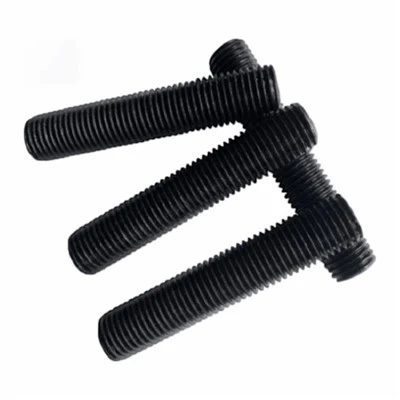
Hey there! As a bolts supplier, I get asked a lot about the difference between metric and imperial bolts. It’s a topic that might seem a bit technical at first, but it’s actually pretty important, especially if you’re in the market for bolts. So, let’s dive right in and break it down. Bolts
The Basics of Measurement Systems
First things first, we need to understand the two measurement systems: metric and imperial. The metric system is used pretty much everywhere in the world except for a few holdouts like the United States. It’s based on units of ten, which makes it super easy to work with. You’ve got millimeters (mm), centimeters (cm), and meters (m) for length.
On the other hand, the imperial system is what you’ll commonly find in the US. It uses inches, feet, and yards for length. It’s a bit more of a hodgepodge, with conversions that aren’t always as straightforward as the metric system. For example, there are 12 inches in a foot and 3 feet in a yard.
Size and Dimensions
One of the most obvious differences between metric and imperial bolts is their size and dimensions. Metric bolts are measured in millimeters. The diameter of a metric bolt is given in millimeters, and the pitch (the distance between the threads) is also in millimeters. For instance, you might have an M8 bolt, where the "M" stands for metric, and the "8" means the bolt has a diameter of 8 millimeters.
Imperial bolts, however, are measured in inches. The diameter is usually expressed as a fraction of an inch, like 1/4 inch or 3/8 inch. The pitch is measured in threads per inch (TPI). So, a 1/4 – 20 bolt has a diameter of 1/4 inch and 20 threads per inch.
This difference in measurement can be a real pain if you’re trying to swap out a metric bolt for an imperial one or vice versa. It’s not just about the diameter; you also need to make sure the pitch is compatible. Otherwise, the bolt might not fit properly, and that can lead to all sorts of problems down the line.
Head Styles and Standards
Another difference lies in the head styles and the standards they follow. Metric bolts often adhere to ISO (International Organization for Standardization) standards. These standards ensure that the bolts are of high quality and are consistent across different manufacturers. Many metric bolts come with hex heads, which are great for using with wrenches and are very common in industrial applications.
Imperial bolts, on the other hand, often follow ANSI (American National Standards Institute) standards. The head styles can be a bit more diverse. You’ll still find hex heads, but you might also come across square heads, which were more common in the past. The choice of head style can depend on the specific application and the tools available.
Strength and Material
The strength and material used in metric and imperial bolts can also vary. In general, both types of bolts are made from a variety of materials, including steel, stainless steel, and brass. However, the way the strength is rated can be different.
Metric bolts typically use a marking system to indicate their strength. For example, an 8.8 bolt is a high – strength bolt, where the first number (8) represents the tensile strength and the second number (8) represents the yield strength as a percentage of the tensile strength.
Imperial bolts often use a Grade system. For example, a Grade 5 bolt is a medium – strength bolt, while a Grade 8 is a high – strength bolt. The grade indicates the minimum tensile strength and yield strength of the bolt.
When choosing between metric and imperial bolts, you need to consider the strength requirements of your application. If you’re working on a high – stress project, you might need to go for a higher – strength bolt, regardless of whether it’s metric or imperial.
Applications
The applications of metric and imperial bolts can also differ based on where you are in the world. In countries that use the metric system, metric bolts are the norm for most industries, including construction, automotive, and manufacturing. They’re easy to source, and there’s a wide range of sizes and styles available.
In the United States, imperial bolts are still widely used, especially in older buildings and machinery. However, as more and more industries become global, there’s been an increase in the use of metric bolts in the US as well. For example, many foreign – made cars and machines use metric bolts, so mechanics and repair shops need to be stocked with both types.
Why It Matters to You
As a customer, understanding the difference between metric and imperial bolts is crucial. If you’re working on a project, you need to make sure you’re using the right type of bolt. Using the wrong bolt can lead to issues like poor fit, reduced strength, and even safety hazards.
If you’re an engineer or a builder, you need to be aware of the standards and regulations in your area. Some projects may require the use of metric bolts for consistency and compatibility, while others might be more flexible.
Making the Right Choice
So, how do you choose between metric and imperial bolts? Well, it depends on a few factors. First, consider the application. If you’re working on a project that’s based on existing metric or imperial standards, it’s usually best to stick with what’s already in place.
Second, think about the availability of the bolts. If you’re in an area where metric bolts are more readily available, it might be easier to go with them, even if your project could technically use imperial bolts.

Finally, don’t forget about the tools you have on hand. If you have a set of metric wrenches but no imperial ones, it might be more convenient to use metric bolts.
Contact Us for Your Bolt Needs
Socket Head Cap Screws If you’re still not sure which type of bolt is right for your project, or if you’re looking to stock up on high – quality metric or imperial bolts, we’re here to help. We’ve got a wide selection of bolts in all sizes, head styles, and strengths. Our team of experts can help you figure out the best fit for your specific needs. Whether you’re a DIY enthusiast or a professional contractor, we’ve got what you need to get the job done right. So, don’t hesitate to reach out and start a conversation about your bolt requirements.
References
- Machinery’s Handbook, 30th Edition. This classic reference book provides detailed information on bolt standards, sizes, and materials for both metric and imperial systems.
- ISO 4014 – ISO 4017: These ISO standards cover the dimensional requirements for metric hexagon bolts, screws, and nuts.
- ANSI/ASME B18.2.1 – This ANSI standard pertains to square and hexagon bolts and screws in imperial units.
Handan Jihao Fastener Co., Ltd.
We’re known as one of the most professional bolts manufacturers and suppliers in China. With abundant experience, we warmly welcome you to wholesale customized bolts made in China here from our factory. If you have any enquiry about cooperation, please feel free to email us.
Address: A2, Row 31, Feiyu Screw World, Hebei Pu, Linmengguan Town, Yongnian District, Handan City, Hebei Province
E-mail: wenzhaona0@gmail.com
WebSite: https://www.chinaboltnut.com/
