Yo, what’s up! As a provider of automotive brushless motors, I often get asked about how to pick the right controller for these motors. It’s a super important topic because the controller is like the brain of the motor – it decides how the motor behaves, how much power it uses, and how efficient it is. So, let’s dig into this and figure out how to make the best choice. Automotive Brushless Motor

Understanding the Basics
First off, we gotta understand what a controller does. In simple terms, a brushless motor controller manages the electrical power that goes to the motor. It determines the speed, torque, and direction of the motor by controlling the flow of electricity through the motor’s windings.
There are a few key things to think about when you’re looking for a controller. One of the most important is the voltage and current ratings. The controller has to be able to handle the voltage and current requirements of your motor. If the controller can’t handle the voltage or current, it might overheat, break down, or not work properly.
For example, if your motor needs a high voltage to run, you need a controller that can supply that high voltage. Similarly, if your motor draws a lot of current, the controller must be rated to handle that current without getting fried. You don’t wanna end up with a controller that’s too weak for your motor – it’s just asking for trouble.
Types of Controllers
There are different types of controllers out there, and each has its own pros and cons.
Sensor – Based Controllers
Sensor – based controllers use sensors, like Hall – effect sensors, to figure out the position of the motor’s rotor. These sensors send signals to the controller, which then uses that information to control the power to the motor’s windings.
The main advantage of sensor – based controllers is that they’re very precise. They can provide smooth and accurate control of the motor, which is great for applications where you need precise speed or torque control. For instance, in electric power steering systems in cars, you need very precise control, and sensor – based controllers can deliver that.
However, the downside is that they’re more complex and usually more expensive. The sensors themselves add to the cost, and they can also be prone to failure. If a sensor goes out, the controller might not work correctly.
Sensorless Controllers
On the other hand, sensorless controllers don’t use external sensors to determine the rotor position. Instead, they use the back – EMF (electromotive force) generated by the motor to figure out where the rotor is.
The big plus of sensorless controllers is that they’re simpler and cheaper. There are no sensors to worry about, which means fewer things that can break. They’re also more compact, which is a plus in automotive applications where space is often limited.
But, they’re not as precise as sensor – based controllers. They can have a bit of a rough start, especially at low speeds, and they might not be as good for applications that require very accurate control.
Matching the Controller to the Motor
Now, let’s talk about how to actually match the controller to the motor.
Power Requirements
As I mentioned earlier, the power requirements are crucial. You need to know the maximum voltage and current that your motor can handle. Look at the motor’s datasheet – it’ll usually have all this information.
Let’s say your motor has a maximum voltage rating of 48V and a maximum current draw of 20A. You’ll need a controller that can supply at least 48V and handle 20A of current. It’s better to go a bit over the requirements, just to be on the safe side. So, you might look for a controller that can handle 50V and 25A.
Speed and Torque Requirements
Think about the speed and torque requirements of your application. If you need your motor to run at high speeds, you’ll need a controller that can support high – speed operation. Some controllers are designed specifically for high – speed motors, while others are better suited for low – to – medium – speed applications.
Similarly, if your application requires high torque, like in an electric vehicle’s traction motor, you need a controller that can deliver the necessary torque. The controller should be able to adjust the power to the motor to provide the right amount of torque at different speeds.
Control Features
The control features of the controller are also important. Some controllers come with basic on – off control, while others have more advanced features like speed control, torque control, and regenerative braking.
If you need to be able to adjust the speed of the motor precisely, look for a controller with speed control capabilities. Regenerative braking is also a great feature, especially in electric vehicles. It allows the motor to act as a generator when the vehicle is slowing down, converting the kinetic energy back into electrical energy and charging the battery.
Other Considerations
There are a few other things to think about when selecting a controller.
Environmental Conditions
Automotive components have to work in all sorts of environmental conditions. The controller should be able to withstand heat, cold, moisture, and vibrations. Look for controllers that are rated for the environmental conditions of your application. For example, if your vehicle will be operating in a hot and humid climate, you’ll need a controller that can handle high temperatures and moisture without malfunctioning.
Size and Mounting
The size of the controller is also important, especially in automotive applications where space is at a premium. You need to make sure the controller will fit in the available space in your vehicle.
Also, think about the mounting requirements. Some controllers are designed to be mounted in specific ways, like on a chassis or a heat sink. Make sure you can mount the controller securely in your application.
Conclusion
Picking the right controller for an automotive brushless motor is a complex but important task. You need to consider the motor’s power requirements, the type of controller (sensor – based or sensorless), the speed and torque requirements of your application, the control features, the environmental conditions, and the size and mounting.
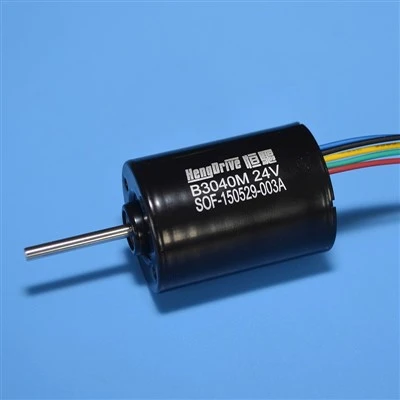
As an automotive brushless motor supplier, I’ve seen firsthand how the right controller can make a big difference in the performance of the motor. So, take your time, do your research, and don’t be afraid to ask for help if you’re not sure.
Automotive Brushless Motor If you’re in the market for automotive brushless motors and need advice on selecting the right controller, or if you have any other questions, don’t hesitate to reach out to me. We can have a chat and figure out the best solution for your specific needs. Whether you’re an automotive manufacturer working on a new electric vehicle model or a hobbyist building your own electric car, I’m here to help. Let’s start a conversation about your procurement and see how we can work together.
References
- Electric Vehicle Power Electronics and Motor Drives, Ali Emadi
- Modern Electric, Hybrid Electric, and Fuel Cell Vehicles: Fundamentals, Theory, and Design, Yimin Gao
Shenzhen HengDrive Technologies Co., Ltd.
Shenzhen HengDrive Technologies Co., Ltd. is one of the most professional automotive brushless motor manufacturers and suppliers in China, specialized in providing high quality customized service. We warmly welcome you to buy the newest automotive brushless motor in stock here from our factory.
Address: Building A & F, FuNing Hi-Tech Park, XinTian Road, FuHai Street, BaoAn District, ShenZhen, GuangDong Province, China.
E-mail: Marketing001@hengdrive.com
WebSite: https://www.hengdrivemotor.com/
