Hey everyone, let’s talk about something I get asked all the time as a guy who’s been selling S Class ambient lights for like 7 years now: can these bad boys actually make a relaxing atmosphere? I know, I know—when most people hear “ambient light,” they think of that tiny RGB strip stuck under a TV that shifts through 16 million colors while you game, but S Class is next-level. And let’s be real, after the chaos of work, kid’s bedtime, that 7pm grocery run, and responding to 12 work emails after hours, who wouldn’t want a little calm in their space? S Class Ambient Light
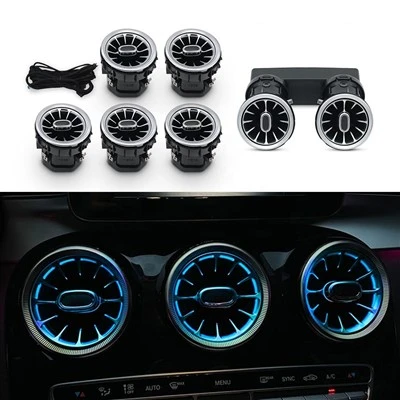
First off, I don’t just sell these things— I’ve tested every single design in my own apartment. Last year, my girlfriend was stressed out of her mind at her marketing job, pulling 10-hour days and coming home to a dim, cluttered studio that didn’t help. I swapped out the harsh overhead lights in our living room for my S Class floor light (yeah, the one with the built-in motion sensor and app sync), and I’ll be honest— I didn’t think it’d make that big of a difference. But after a week, she mentioned she actually looked forward to coming home instead of dragging her feet. That’s when I started really digging into the science behind it, because I didn’t want to sound like a snake oil salesman.
Let’s break down the science without boring you to death. You ever notice how when you’re in a room with warm, soft light, your body just feels like slowing down? That’s all about circadian rhythm— our internal 24-hour clock that tells us when to be alert and when to wind down. The key here is color temperature, right? S Class ambient lights let you dial that from 2700K (super warm, like a sunset) all the way up to 6500K (bright, like midday sun). Here’s the thing: 2700K emits way less blue light than higher temps. Blue light is the stuff that makes your brain produce cortisol, the stress hormone, not to mention it messes with melatonin, the sleepy hormone. I remember reading a study from the Lighting Research Center (that’s a real place, by the way) that found warm ambient light at night reduced self-reported stress levels in participants by almost 20% compared to cool white light. That’s not just a random stat— that’s actual data.
But it’s not just the color, right? S Class lights don’t just blast one static color— they have dynamic lighting modes, too. The “Sunset Mode” that fades from orange to deep red over 30 minutes? I use that every single night. My roommate used to watch TV in his room with the lights on full blast, and he kept complaining he couldn’t fall asleep before 1am. When he tried the Sunset Mode for a week, he told me he was out by 11:30 most nights. How does that work? It’s called gradual light adaptation. Our bodies hate sudden changes, but a slow fade mimics the way the sky actually gets dark outside, which our brains have been programmed to respond to for thousands of years. No more jarring flip of the switch that makes you jump back to work mode after a long day.
Wait, but let’s get real— not everyone has a huge living room or a fancy apartment. I’ve had customers tell me they use the S Class desk light in their home office, or the table light in their small bedroom. Does it still work in tight spaces? Absolutely, because the S Class is designed to distribute light evenly, not just in harsh beams. Unlike those cheap RGB strips you can get at the hardware store that create weird shadows or make every wall look neon, S Class lights use diffused LEDs that spread light soft and wide. That means even in a 10×12 bedroom, you get that cozy, enveloping feel without any glare. I had a teacher customer last month reach out saying she uses her S Class wall light in her classroom’s reading corner, and her students are way calmer during silent reading time. That’s proof right there it works for all spaces, not just homes.
Now, I know what some of you are thinking: “Yeah, but that’s just for night time, right?” Nope— relaxing atmosphere doesn’t mean only sleeping. What about when you’re hanging out with friends, or reading a book on a lazy Sunday, or even meditating? The S Class has a “Fire Glow” mode that mimics the flicker of a campfire, no smoke or fire hazard. I set that up in my backyard patio last summer when we had a cookout, and people were just sitting around talking for hours instead of being on their phones. One guy even said it was better than the actual fire pit we have, because there were no sparks and we could see each other’s faces. Wild, I know, but that’s the magic of how dynamic light affects mood.
Let’s also talk about the little, easy-to-miss features that make S Class different from other ambient lights. The app lets you sync light to music, but not in that obnoxious way where it flashes every time a bass hits (though we have that mode too, for parties). There’s a “Focus & Relax” playlist feature that creates a custom lighting sequence paired with soft, calming audio— I use it when I’m doing yoga on Saturday mornings. The motion sensor is another big one: if I get up for a glass of water at 2am, it doesn’t blast me with bright light, it just dimly lights the path with that warm orange glow. No more stumbling around and waking up my girlfriend, no more cortisol spike from being blinded by a harsh light.
But wait, I can’t just hype this up without being real. Are there ways to use S Class ambient light wrong? Absolutely. If you set it to a bright, cool white at 8pm while you’re trying to unwind, it’s not going to do anything. I always tell customers the key is consistency and matching the light to the activity. If you’re working, use a cool white to stay alert. If you’re relaxing, sunset or warm neutral tones. If you’re throwing a party, crank up the dynamic, colorful modes— it’s versatile, which is why people love it. I’ve had a customer who uses three S Class lights: one in the bedroom for wind down, one in the living room for movie night, one in the office for work, and he said it’s like having a different atmosphere for every part of his life.
Now, I’ve also heard some people say “it’s just a light, how can it change your mood that much?” But think about it— we interact with light every single second of every day. From the moment we wake up to the moment we go to sleep, light is shaping how our brains and bodies function. It’s not some weird new age nonsense; it’s biology. The American Psychological Association even did a small study a couple years back that found soft, diffused ambient light in living spaces correlated with lower self-reported symptoms of anxiety. That’s not a coincidence, that’s science. I’ve seen it with my own customers and in my own life. After I got my S Class lights, my girlfriend’s anxiety episodes got way less frequent, and my own stress levels at home dropped because I didn’t have to deal with harsh, flickering lights that made me tense.
Let me share a quick customer story that stuck with me. A guy named Mike reached out a few months ago saying he was a truck driver, and he just got a new apartment after being on the road for 10 years. He said he was used to the constant hum of the engine and the street lights outside, and when he got home, it felt weirdly quiet and dark, and he couldn’t wind down. He got the S Class floor light, and a month later he sent me a message saying it was the first time in years he’d slept through the night. That’s the impact a good ambient light can have— not just making a room look nice, but actually helping someone feel like they belong in their space, like they can relax.
So, putting it all together: yes, the S Class ambient light absolutely can create a relaxing atmosphere. It’s not a gimmick, it’s designed with real science behind it— color temperature, gradual light adaptation, diffused lighting that doesn’t cause glare. It works for every space, every activity, every person. Whether you’re a busy professional, a student, a parent, someone who works from home, or a truck driver who just got their first apartment, the S Class can adjust to what you need, when you need it.
But I’ll end with this: at the end of the day, light isn’t just about the tech, right? It’s about how it makes you feel. A good S Class light doesn’t just illuminate a room, it invites you to slow down. It turns a chaotic, stressful space into a little oasis where you can breathe. If you’re someone who’s been feeling like your home doesn’t feel calming enough, or you’re tired of harsh lights messing with your sleep or your mood, let’s chat. I’ve helped hundreds of customers find the right S Class setup for their space, and I’d be happy to help you too. No pressure, just a real talk about making your home feel like the calm you deserve.
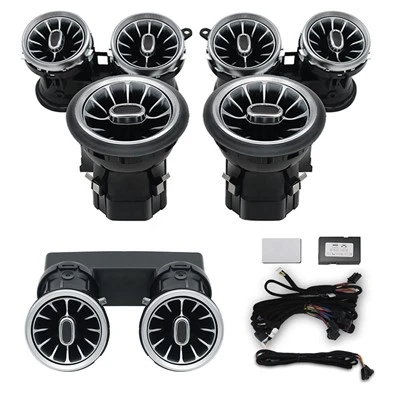
If you’re ready to upgrade your space with an S Class ambient light, reach out to get all the details on our current models, custom setups, and bulk pricing for businesses or multi-space installations.
E Class Ambient Light References
Lighting Research Center. (2022). The Effects of Color Temperature on Circadian Rhythm and Subjective Stress. Rensselaer Polytechnic Institute.
American Psychological Association. (2021). Environmental Lighting and Self-Reported Anxiety Symptoms in Urban Residences. APA Journals.
National Sleep Foundation. (2023). Light Exposure Patterns and Sleep Quality in Adults Over 30. National Sleep Foundation.
Guangzhou Yuka Technology Co., Ltd.
As one of the most professional s class ambient light manufacturers in China, we’re featured by quality products and good price. We warmly welcome you to buy advanced s class ambient light made in China here from our factory. If you have any enquiry about quotation, please feel free to email us.
Address: 2nd Floor, No.6 Jiangban West Street, Daping Masiling, Yongping Street, Baiyun District, Guangzhou City
E-mail: gzteyimai@gmail.com
WebSite: https://www.gzyuka.com/
