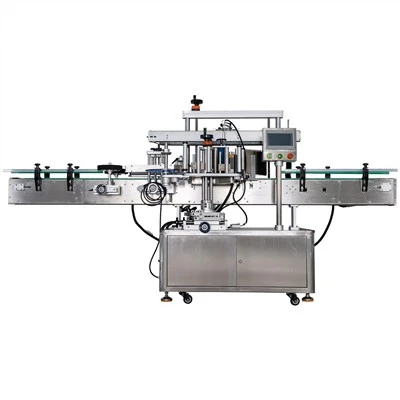
Hey there! If you’ve ever been around factories, warehouses, or even the snack aisle at your local grocery store, you’ve seen automatic labeling machines in action. They’re those whirring, unassuming units that slap price tags, nutrition labels, or shipping barcodes onto everything from cereal boxes to automotive parts. But lately, I’ve been getting a ton of questions from folks who’re in the market for one: “What’s the deal with the conveyor’s load-bearing capacity? Does it even matter?” Automatic Labeling Machines
Full transparency here, since I run a company that builds and sells these machines: I get it. Load capacity sounds super technical, like something only engineers care about. But it’s actually one of the biggest make-or-break details when you’re picking a labeling machine that works for your product. Mess this up, and you’ll be dealing with jammed conveyors, broken labels, and way more downtime than you planned for. So let’s break this down like we’re chatting over coffee—no stuffy jargon, promise.
First off, let’s be clear: Yes, automatic labeling machines do have a conveyor, and yes, it absolutely has a load-bearing capacity. That number isn’t just a random spec we throw on a spec sheet. It’s how much steady weight the conveyor can carry without sagging, slowing down, or worse, snapping mid-production.
Here’s where most people go wrong: They look at the machine’s total weight or the size of the product and guess. No. That’s not how this works. The conveyor’s load capacity depends on way more than just how heavy the item is. Let’s start with the basics of what the conveyor in a labeling machine actually does: It’s not like a big warehouse conveyor that moves pallets of water. Our labeling machine conveyors are smaller, built to move products single-file through three key stations: one where the product comes in, one where the label is applied, and one where it goes out.
The load capacity here is calculated by how the conveyor is built—think the frame material, the type of belt, and the rollers. We use two main conveyor types in our machines, actually: modular belts and flat belts. Modular belts are those interlocking plastic ones, great for heavier, oddly-shaped stuff like plastic jugs or metal components. Flat belts are thinner, usually rubber or fabric, used for lighter, more delicate items like small cosmetic bottles or printed boxes. Each has its own sweet spot for load capacity, and that’s not a number we pull out of thin air.
Let’s talk real numbers, since that’s what everyone wants. For our standard small-to-medium labeling machines (the kind used for cosmetics, pharmaceuticals, or small food products), the conveyor’s load capacity usually ranges from 5 to 25 kilograms, or about 11 to 55 pounds. Wait, that seems low? Let me explain. That’s not per square foot—it’s per product, and it’s continuous. So if you’re running a line of 5kg jugs, each jug sits on the conveyor alone, right? But if you stack two jugs on the same spot, that’s 10kg, which is over the limit and will cause problems.
For our industrial labeling machines, the ones built for big, bulky stuff like 5-gallon water jugs or automotive parts, that load capacity jumps. We’re talking up to 100 kilograms (220 pounds) per product, sometimes more if you customize the conveyor frame. But even there, there’s a catch. You can’t just cram a 100kg engine block onto a tiny conveyor meant for 50kg parts. The frame might hold, but the rollers could seize up, or the belt might stretch so much it won’t align the product straight for labeling. That’s a bad day at work, trust me.
Now, why does this matter to you as a buyer? Let’s use a couple of real examples of customers I’ve worked with lately. Last quarter, a small craft brewery came to us. They wanted a labeling machine for their 1-liter beer bottles, which weigh about 0.8kg each. They were tempted by a super cheap machine from a no-name brand, but when we checked their proposed setup, that machine’s conveyor was only rated for 2kg total. They planned to run 12 bottles at a time? Wait, no—turns out they thought the number on the spec sheet was for the whole conveyor, not per item. We walked them through it: their bottles are 0.8kg each, so even if the conveyor was rated for 2kg, they could only run two bottles at once. That would mean half the production speed they needed. We swapped in a slightly more expensive conveyor rated for 10kg, which let them run 10 bottles at a time, hit their 1,000 bottles per hour target, and save them from wasting money on a machine that would’ve been too slow.
Another one: A automotive parts supplier came to us wanting to label brake calipers. Each caliper is 8kg, and they needed to run 60 units per hour. The first machine they looked at had a conveyor rated for 5kg—way too low. They thought, “8kg isn’t that heavy, right?” But because the calipers are oddly shaped, they sit on two small points of the conveyor, not the full belt. That means the load is concentrated, not spread out. If you have a conveyor rated for 5kg, and the weight is all on one small section, that section is actually carrying way more than 5kg. We upped them to a heavy-duty modular conveyor rated for 30kg, which spread the weight evenly across the belt, so no stress on the frame or rollers. It cost a bit more, but it meant they didn’t have to stop every 10 minutes to fix a jam, which would’ve cost them way more in lost production.
Wait, let’s not forget the hidden factors that people don’t talk about with load capacity. First, speed. If you run a conveyor faster than it’s designed for, its load capacity goes down. That makes sense, right? If you’re shoving a heavy item quickly onto a conveyor, it jolts, adding extra force. So a conveyor rated for 20kg at 30 meters per minute is only good for 15kg if you crank it up to 45 meters per minute. That’s a key point to check in the spec sheet—most brands won’t list load capacity at different speeds, so you have to ask.
Second, product shape and surface. If your product is super smooth, like a glass bottle, it might slide a bit on the conveyor, which adds friction. If it’s rough, like a cardboard box, it doesn’t slide as much, so less friction. Too much friction can add extra load to the conveyor, even if the product itself is light. And if your product has any sharp edges—like metal parts—those can wear through the conveyor belt over time, which effectively lowers its load capacity because you’re constantly replacing parts.
Third, customizations. A lot of customers want to add things like side guides, product holders, or even small drying stations right on the conveyor. Every single one of those adds weight. If you add a side guide that’s 2kg, that’s taking away 2kg of your total load capacity for products. We always factor in those custom bits when we design a machine, but if you’re buying a off-the-shelf one, you might not have that head’s up.
Now, how do you figure out what your machine’s load capacity needs to be? Let’s make this simple, no math degree required. First, weigh your heaviest product. Then, multiply that by 1.25. That’s your minimum load capacity needed. Why 1.25? That’s a safety factor. We add 25% extra to every machine we build, just in case you’re running a slightly heavier batch, or you want to speed up the line a bit without breaking it. If you skip that safety factor, you’re one bad batch away from a broken conveyor.
Let’s test that with the brake calipers: 8kg times 1.25 is 10kg. So even though the caliper is 8kg, you need a conveyor rated for at least 10kg. Which is why the 5kg one was too small, and the 30kg was overkill, but perfect for their speed.
Now, what if you need a custom conveyor? No problem, that’s half the fun of building these machines. I’ve had customers come in with stuff like 20kg industrial valves, or 50kg plastic barrels, and we build custom conveyor frames, thicker rollers, and reinforced belts to handle that. The load capacity can go way up—we’ve had machines with conveyors rated for 200kg for large industrial equipment parts. But again, that’s only if you need it. Don’t pay for 200kg capacity if you’re only moving 10kg bottles. It’s a waste of money.
A lot of people ask me, “Can I upgrade the conveyor later if I need more load capacity?” The short answer: sometimes. If the machine’s frame is already reinforced enough, you can swap out the belt and rollers for heavier ones. But if you bought a cheap machine with a thin, flimsy frame, you can’t upgrade the conveyor without replacing the whole frame, which is more expensive than just buying a new machine. That’s why buying a reputable machine from a company that builds their conveyors with upgradeability in mind is key.
Let’s talk about common mistakes I see buyers make. Number one: Ignoring the safety factor. They see a machine rated for 10kg, their product is 9kg, so they think it’s fine. But if they run 10 products at once, that’s 90kg total, way over the 10kg rating. I’ve seen that happen so many times—jammed belts, broken rollers, whole lines down for hours. Number two: Confusing total load capacity with per-product load capacity. That’s the brewery mistake I mentioned earlier. If the spec sheet says “20kg conveyor capacity,” that’s per product, not the whole conveyor. If it was total, a 20kg conveyor would only hold one 20kg product at a time, which is not useful for any production line. Number three: Not asking about load capacity at different speeds. A machine might say 15kg capacity at 20m per minute, but if you run it at 50m per minute, that drops to 10kg. If you don’t check, you’ll end up overloading it.
Now, let’s get to the bottom line: The load-bearing capacity of your automatic labeling machine’s conveyor is not a trivial spec. It’s the difference between a machine that runs 24/7 without issues, and one that’s a headache you have to repair every week. It’s also the difference between paying a little extra now and wasting thousands in lost production later.
If you’re shopping for an automatic labeling machine, don’t just look at price or brand name. Ask the seller straight up: “What’s the conveyor’s load capacity, is that per product, and what’s the safety factor?” Tell them about your heaviest product, how fast you want to run the line, and any custom bits you’re adding. A good supplier will walk you through that, not just hand you a spec sheet and say “it works.”

At the end of the day, we build these machines to make your life easier, not harder. We don’t cut corners on conveyor load capacity because we don’t want our customers to come back with broken machines. If you’re not sure what you need, just reach out. We can walk through your setup, answer any questions, and help you pick the right machine that fits your budget and your production needs. No pressure, no sales pitches—just real talk about getting a machine that works for you.
Automatic Labeling Machines References:
- Material Handling Industry of America. "Conveyor Load Capacity Standards for Automated Packaging Equipment". 2021.
- International Society of Automation. "Specifying Load Ratings for Conveyors in Labeling and Packaging Machinery". 2022.
- Journal of Manufacturing Systems. "Design Considerations for Small-Batch Automated Labeling Conveyors". Volume 48, 2018.
Langfang Huanqi Machinery Equipment Co., Ltd.
As one of the most professional automatic labeling machines manufacturers and suppliers in China, we also support customized service. Please feel free to buy advanced automatic labeling machines for sale here from our factory. Quality products and reasonable price are available.
Address: No. 40, Row 11, North Side of Central Street, Wangpeizhuang Village, Pingshu Town, Dacheng County, Langfang City, Hebei Province
E-mail: huanqijixie@outlook.com
WebSite: https://www.huanqiwrap.com/
