Hey everyone, if you’ve ever shopped for CNC machining equipment, chances are you’ve stumbled on both CNC lathes and Swiss-type lathes—and probably wondered what the actual difference is. As someone who’s been in the CNC lathe supply game for years, I’ve lost count of how many customers come in asking, “Wait, is a Swiss lathe just a fancy CNC lathe for small parts?” Short answer? No, not even close. They’re two totally different tools, built for totally different jobs. Let’s break this down like we’re chatting in my shop’s break room (no stuffy engineering jargon, promise). CNC Lathe

First, let’s start with the basics: what a regular CNC lathe does, in case you need a quick refresh. A standard CNC lathe spins a workpiece (that’s the raw metal or plastic part you’re machining) on a central axis, while a cutting tool moves along X and Z axes to cut, drill, thread, or face the part. Think of it like a wood lathe you might’ve seen in a hobby shop, but 100x more precise, computer-controlled, and way beefier for industrial parts. You use these for all kinds of stuff—car engine components, large plumbing fittings, even furniture hardware that’s a bit bigger.
Now, Swiss-type lathes (often just called “Swiss lathes” or “Swiss screws machines” in the shop) get their name from their origins: they were developed in Switzerland back in the 1800s for making tiny, precise watch parts. Today, they’re still the go-to for extremely small, complex parts, but their design is where the magic (and the difference) lives. The big, defining feature? The workpiece isn’t held out on a long spindle like a regular CNC lathe. Instead, it’s guided through a bushing (usually made of hard material like carbide) that’s super close to the cutting tool. That means the part is supported almost the entire time it’s being machined—no wiggling, no flexing, even when the part is only a few millimeters wide.
Let’s get into the real hands-on differences, because that’s what actually matters when you’re picking a machine. First up: part size and rigidity. If you’re machining a part that’s, say, 2 inches in diameter or bigger, a standard CNC lathe is your guy. Swiss lathes have a max bar size that’s usually way smaller—most can handle bars from 1/8 inch up to like 1 1/2 inches, tops. But here’s the catch: if you’re machining that tiny 1/4-inch screw for a medical device or a pin for a watch, that small size is where Swiss lathes shine. A regular CNC lathe would hold that tiny part at the end of a long spindle, and as soon as you touch it with the cutting tool, it’d flex like a wet noodle. You’d get a wobbly, inaccurate part. Swiss lathes eliminate that flex with that close-guiding bushing—so you get perfect consistency every time, even on super slender parts.
Next, tooling and setup time. Regular CNC lathes usually have a turret that holds 8 to 16 cutting tools, and you swap them out as needed for different operations. You’ll do a little setup here, but it’s straightforward: load the bar, set the offsets, run a test cut, and you’re good. Swiss lathes? They’re built for multi-tasking, and they have way more tool stations—sometimes 20 or more, with tools positioned above, below, and even behind the workpiece. That’s because you can do multiple operations in one setup: drill a hole on one axis, thread on another, mill a flat spot on the side, all while the part is still in the bushing and never moved. For complex small parts, that means you don’t have to take the part out and re-clamp it between operations, which cuts down on errors and saves hours of setup and cycle time. I had a customer last year making tiny titanium pins for pacemakers—they were using a regular lathe before, and it was taking 12 minutes per part with 20% scrappage because of re-clamping errors. Switched to a Swiss lathe, cut cycle time to 3 minutes per part and scrappage dropped to less than 1%. Game changer.
Wait, but hold on—regular CNC lathes aren’t out of the picture by any means. Their design makes them way better for larger, heavier parts that need deeper cuts. If you’re machining a 6-inch aluminum wheel hub for a truck, a Swiss lathe would struggle with the size and the heavy material removal. Regular lathes have way more spindle torque and larger chucks that can hold bigger parts rigidly, so you can take those deep cuts fast without stressing the machine. They’re also simpler to program for basic, larger parts—you don’t need the extra multi-axis tooling programming that Swiss lathes require, which is a plus for smaller shops that don’t have a dedicated CNC programmer on staff.
Another big difference: chip management. I know, chip sounds boring, but it’s a huge pain point for machinists. On a regular CNC lathe, chips tend to curl up or get tangled around the workpiece, especially when you’re cutting long parts. You have to stop the machine all the time to clear chips, which slows production down. Swiss lathes, because the part is supported right up against the bushing, have a way tighter work envelope, and the tools are positioned such that chips break into small, manageable pieces that fall away on their own. No more stopping every 10 parts to fish out a tangled chip—you can run lights out for hours, which is why so many medical and electronics shops love them for high-volume runs.
Don’t get me wrong, Swiss lathes aren’t a “better” version of CNC lathes—they’re built for totally different jobs. I see so many new machinists making the mistake of buying a Swiss lathe when they only need it for occasional tiny parts, and they end up wasting money on a machine they don’t use to its full potential. And vice versa: buying a regular CNC lathe for a shop that makes 90% small medical parts, and dealing with scrappage and slow cycle times because you picked the wrong tool.
Let’s use a real example to make this concrete. Say you have two jobs: Job 1 is making 1,000 3-inch brass valves for outdoor faucets. Job 2 is making 50,000 2mm stainless steel screws for insulin pens. For Job 1? A standard CNC lathe is ideal. It can handle the 1.5-inch diameter bar stock, take heavy cuts to shape the valve body, and produce each part in around 2 minutes. For Job 2? A Swiss lathe is the only way to go. The tiny 2mm part would flex on a regular lathe, so you’d get inconsistent thread pitches and scrappage. The Swiss lathe’s bushing keeps the part perfectly aligned, the multi-tool setup lets you cut the thread, drill the end hole, and mill the drive slot all in one setup, and the chip handling lets you run 24/7 with minimal supervision.
Now, as a CNC lathe supplier, I’m not here to push one over the other— I’m here to help you pick what works for your shop. I’ve seen customers come in thinking they need a Swiss lathe because everyone’s talking about it, but when we walk through their production needs, they realize a standard CNC lathe is a way better, more cost-effective fit. On the flip side, I’ve had guys with shops making tiny aerospace components that thought a regular lathe would work, and we talked them into a Swiss lathe that doubled their production and cut their costs.
If you’re still confused about which one’s right for you, or you’re looking to upgrade your current setup, don’t overcomplicate it. At the end of the day, it all comes down to part size, complexity, and production volume. Need large, sturdy parts? Stick with a standard CNC lathe. Need tiny, precise, complex small parts? Swiss-type is your guy. And if you’re somewhere in between? There are even hybrid machines these days, but that’s a whole other conversation.
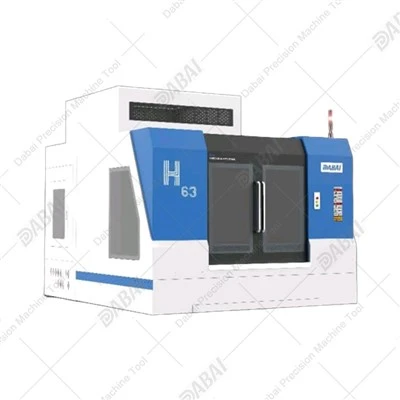
No matter what job you’re tackling, the key is understanding the core differences—so you don’t waste time, money, or parts on the wrong tool. I’ve been in this long enough to know that picking the right machine is half the battle for smooth, profitable machining. If you’re ready to chat about your specific projects, or you just want to bounce ideas off someone who’s seen it all, hit me up. I’m always happy to help a fellow machinist or shop owner get the right gear for their needs.
Gantry Machining Center References
- Smid, P. (2019). CNC Turning: A Comprehensive Guide to Programming and Operations. Industrial Press.
- Swiss-Style Lathes vs. CNC Lathes: Key Differences and Applications. Modern Machine Shop. Retrieved from industry publications archive, accessed 2024.
- Machining 101: Selecting the Right Lathe for Your Production Needs. Manufacturing Engineering Magazine, Vol. 168, No. 3, 2022.
Dabai Precision Machine Tool (Jiangsu) Co., Ltd.
As one of the most professional CNC lathe manufacturers and suppliers in China, we’re featured by quality products and good price. Please rest assured to buy advanced CNC lathe for sale here from our factory. We also accept customized orders.
Address: No. 66-1, Zhenhu North Road, Hudai Town, Binhu District, Wuxi City
E-mail: elaine@dabaicnc.com
WebSite: https://www.cnc-dabai.com/
