If you’ve ever stood on a production floor of a snack factory, pharmaceutical plant, or consumer goods warehouse, you’ve likely watched a cartoning machine hum along, folding flat cardboard blanks into neat boxes, dropping in products, and sealing them—all in a fraction of a second. For anyone who’s ever prioritized production efficiency, one question rises above all others when evaluating these machines: What is the carton erecting speed of a cartoning machine? The answer isn’t a one-size-fits-all number, and as a cartoning machine supplier who’s spent 12 years walking alongside clients on their production lines, I can tell you that tying speed to just a digit on a spec sheet is a mistake that leads to bottlenecks, downtime, and lost revenue. Today, let’s break down what carton erecting speed actually means, what factors shape it, how to use it to choose the right machine, and why so many brands get this number wrong to drive unnecessary sales. Cartoning Machine
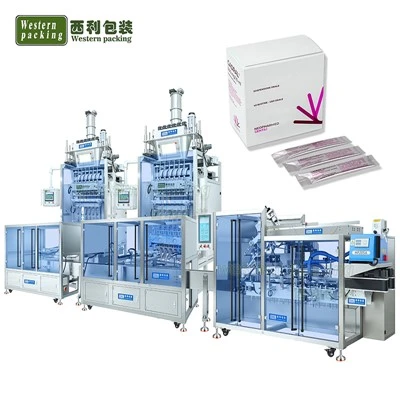
First, let’s define the term clearly because it’s often misused in the industry. Carton erecting speed refers to the number of intact, ready-to-fill cartons a machine can form and present to the product loading station per minute. It’s often confused with overall cartoning line speed, but that’s a separate metric—overall speed includes erecting, product insertion, sealing, and coding, while erecting speed only measures the core task of turning a flat cardboard blank into a closed-bottom carton.
At my company, we don’t just pull a number from thin air when we share carton erecting speed with a client. We test every machine under real production conditions, not just in a lab. For example, a standard small carton for a single energy bar (roughly 100mm x 50mm x 20mm) will form much faster than a large shipping carton for a case of water bottles, right? That’s a basic, often overlooked variable. Most suppliers will quote a “maximum theoretical speed” of 400 cartons per minute (CPM) for a mid-range machine, but that’s only achievable under perfect circumstances: with standardized, high-quality cardboard blanks, no pauses for product jams, and cartons designed for simple erecting (like a tuck-bottom style). The real-world working speed, which is what you should care about, is usually 70-85% of that theoretical number—so for that same 400 CPM machine, your actual erecting speed will be 280-340 CPM. That’s a critical distinction I wish more buyers understood.
Now, what actually determines how fast a machine can erect cartons? Let’s go through the key factors, all of which I’ve seen make or break a client’s production output.
First, carton design and material. The complexity of the carton’s bottom flap is the biggest driver here. A simple tuck-bottom carton—where two small flaps fold in and tuck into slots in the carton side—can be erected in a fraction of a second. But a crash-lock bottom, which is sturdier and preferred for heavy products like glass jars or canned goods, requires the machine to fold and lock four flaps in sequence, adding 0.2 to 0.5 seconds per carton. That translates to a 50-100 CPM drop in speed for the same machine. Then there’s cardboard quality: corrugated vs. paperboard, thickness, and coating. Thin, smooth blanks from a reliable mill will feed and fold easily, while thick, textured blanks or those with minor creasing errors will jam more often, slowing erecting speed down. I once worked with a pharmaceutical client who tried to cut costs by switching to cheaper cardboard blanks; their erecting speed dropped from 320 CPM to 210 CPM in a week, and they ended up paying more in overtime to make up for lost output than they saved on blanks.
Second, machine technology and design. Not all cartoning machines are built the same. Entry-level machines, often used for low-volume, small-batch production, might have a manual blank feed or a simple vacuum pick-and-place system, which maxes out at around 150-200 CPM. Mid-range servo-driven machines, which use electric motors to control every movement of the blank, will typically hit 250-350 CPM for standard cartons. High-speed inline machines, used for large-scale production like candy bars or supplements, can reach up to 500 CPM for simple designs, but that requires precision engineering—parts calibrated to within a fraction of a millimeter, quick-changeover systems, and automatic blank feeding. Another often-overlooked design feature is the erecting station itself. Some machines use a stationary formers to fold the carton, while others use rotating arms that wrap around the blank. The rotating arm system is faster because it doesn’t require the carton to stop mid-movement, but it’s more expensive to manufacture. I always explain this to clients: if you’re running 5,000 cartons an hour, paying a little more for a servo-driven erecting station will save you thousands in lost production over a year.
Third, production environment and operator training. This might surprise you, but a well-lit, clean production line with operators trained to spot small issues will have 10-15% higher erecting speed than a line that’s cramped or has operators who only got a half-day of training. Jams are the biggest enemy of consistent speed; a machine that stops for a jam every 20 minutes will have a far lower hourly output than one that runs for an hour without stopping, even if their maximum CPM is the same. I’ve had clients call me in a panic because their new machine was “only” running 250 CPM when the spec said 350 CPM—only to find out the operators were not aligning the blank feed correctly, leading to constant misfeeds. A 30-minute training session fixed that, and their speed went right up to 310 CPM within a day.
Now, let’s talk about why so many suppliers overstate carton erecting speed. It’s a common sales tactic: quoting the theoretical maximum speed, not the real working speed, to make their machine look better than the competition. For example, Supplier A might quote 400 CPM, while Supplier B quotes 350 CPM—so a buyer assumes Supplier A’s machine is better, without considering that Supplier A’s speed is theoretical, while Supplier B’s is a real working number. At my company, we’ve seen this trick so many times that we now always share both numbers upfront, along with the test conditions. We test our machines with standard tuck-bottom cartons, using grade 230 GSM paperboard, and run them for a full 8-hour shift to get the average working speed, not just a 10-second burst of maximum speed. That’s the number you should compare, not the theoretical one.
What does this mean for your business? Let’s do a quick real-world example. A snack manufacturer is looking for a cartoning machine to pack their individual cookie packs. They need to process 15,000 cartons per hour. If they buy a machine with a theoretical erecting speed of 350 CPM, their real working speed would be around 280 CPM. That would give them 16,800 cartons per hour, which is enough to cover their needs with a little extra for downtime. But if they base their purchase on a theoretical 400 CPM, they’d get a real speed of 320 CPM, which would only do 19,200 cartons per hour—wait, no, that’s actually more. Wait, let’s adjust that: if they need 15,000 per hour, that’s 250 per minute. So a machine with a real working speed of 270 CPM would be more than enough, and it would be cheaper than a machine rated for 350 CPM. Buying a machine that’s too fast for your actual output is a waste of capital; it’s like buying a semi-truck to drive back and forth to the grocery store. Conversely, buying a machine that’s too slow will lead to bottlenecks that force you to add a second shift or pay for overtime, which adds up over time.
Another point to consider is changeover speed. If you run multiple products, your carton erecting speed will drop when you switch between different carton sizes or styles. A machine with quick-change parts will take 10 minutes or less to switch, so your total efficiency doesn’t drop. A machine that requires parts to be manually adjusted and tools to change will take 2 hours, and during that time, your erecting speed is zero. So when evaluating erecting speed, don’t forget to ask how long it takes to change between carton sizes. That’s a hidden factor that has a huge impact on overall productivity.
I’ve seen so many clients make the mistake of focusing only on speed when buying a cartoning machine. Last year, I worked with a small pet food company that bought a high-speed machine from a overseas supplier that quoted 450 CPM. When it arrived, they tried to use it for their 500g bag-in-box cartons, and the real erecting speed was only 180 CPM, because the machine wasn’t designed for heavy cartons, and the overseas supplier didn’t account for the thicker cardboard they used. They ended up spending $20,000 to modify the erecting station to handle their cartons, and the speed only went up to 220 CPM. If they’d worked with a local supplier who understood their specific needs, they could have gotten a machine rated for 250 CPM that fit their cartons perfectly, for $10,000 less, no modifications needed.
So, what should you do when evaluating carton erecting speed for your next cartoning machine? First, ignore the theoretical maximum speed. Ask for the real-world working speed, tested under conditions that match your actual carton designs, materials, and shift length. Second, test the machine if you can. Most reputable suppliers will let you send your own carton blanks to their facility to run a test, so you can see the actual speed for yourself. That’s the best way to avoid surprises. Third, don’t forget about secondary factors: changeover time, machine reliability, and after-sales support. A machine that has a high erecting speed but breaks down every other day is useless compared to one with a slightly lower speed that runs 99% of the time.
At the end of the day, carton erecting speed is a critical metric, but it’s not the only one. It’s a tool to measure how efficiently your machine can turn blanks into boxes, but only if you use the right number to compare. As a supplier, our job isn’t just to sell you the fastest machine on the market—it’s to sell you the machine that’s right for your production needs. We’ve worked with startups running 1,000 cartons a day, and with large corporations running over a million cartons a day, and in every case, the best choice wasn’t the one with the highest speed, but the one that matched their output, their cartons, and their budget.
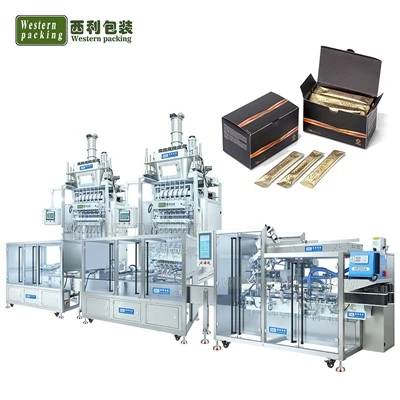
If you’re in the market for a new cartoning machine, and you’re tired of spec sheets with misleading theoretical speeds, or you’re not sure what erecting speed you actually need for your products, let’s talk. We can bring a test machine to your facility with your own carton blanks, run a full test, and give you a clear, honest breakdown of what speed you can expect in your real production environment. No fine print, no misleading numbers, just straight talk about what will work for your business.
Liquid Packaging Machine References
- Cartoning Machinery Design and Operation, 2nd Edition. Industrial Press Inc., 2021.
- “Efficiency Metrics for Packaging Lines,” Packaging Digest, June 2022.
- “Choosing the Right Cartoning Machine for Your Production Needs,” Food and Drug Packaging Association, 2023.
Guangzhou Western Packing Co., Limited
Guangzhou Western Packing Co., Limited is one of the most professional cartoning machine manufacturers and suppliers in China, also supports custom service. With abundant experience, we warmly welcome you to wholesale durable cartoning machine at competitive price from our factory.
Address: No.3, Yilong street, Wulonggang, Zhongluotan Twon, Baiyun District, Guangzhou
E-mail: david@westernpacking.com
WebSite: https://www.westernpackingusa.com/
