Hey there! If you’re in the market for transmission parts, you’ve probably stared at a quote and thought, “Wait—why is this part $20 here and $200 there?” Trust me, I get it. As a transmission parts supplier, I field this question at least three times a day: How much do these things really cost? And honestly? There’s no one-size-fits-all answer, but I’ll break it down like we’re chatting over a coffee (no fancy industry jargon, promise). Transmission Parts

First off, let’s get one thing straight: transmissions aren’t like a toaster or a car door part. They’re the brain and muscle of your vehicle, moving power from the engine to the wheels, so every little component matters. The cost of a single part can swing wild—we’re talking $10 for a basic clip to $1,500 for a rare solenoid pack for a 2019 truck. Let’s start with the most common parts people ask about, because that’s where most folks begin.
Basic wear-and-tear parts—think gaskets, seals, O-rings, filter kits—these are the cheap stuff that keep your transmission from leaking like a sieve. When I first started in this business, I used to underestimate these, but now I know they’re the unsung heroes. A full filter and gasket set for a standard sedan? Usually $15 to $40. If it’s a heavy-duty truck or an SUV with a bigger transmission, it might creep up to $50 or $60. The seals? Small rubber ones (like the input shaft seal) are $8 to $15 each. The big main seals? Maybe $25 to $45. These don’t sound like much, but skimping on them can lead to big problems later—ask me how I know (hint: I once had a customer skip a $12 seal, blow their transmission, and drop $3,000 on a replacement. Lesson learned).
Next up: solenoids and sensors. These are the bits that control when your transmission shifts, so if they go out, you’re stuck in neutral or shifting way too hard. The small shift solenoids for a front-wheel-drive car? Usually $30 to $80. The bigger pressure control solenoids for trucks or performance vehicles? Can jump to $100 to $250. Then there are the transmission speed sensors—super common to fail, and for a sedan, they’re $20 to $50. But if you’ve got a luxury car or a diesel truck, that sensor can be $150 to $300. I had a customer last month with a 2022 Ram 2500—his speed sensor was $275, and he was mad until he saw how many precision parts went into making it. Makes sense now, right?
Now let’s talk about the parts that get people really sticker-shocked: the bigger, internal parts. Like planetary gears, the things that create the different gear ratios. A set of planetary gears for a standard sedan is around $150 to $300. But if you’re dealing with a performance transmission or a heavy-duty trans for a tow truck? That same set can be $500 to $1,200. Then there are the clutch packs—these are the disks that grab to shift gears, and they’re a big one. A rebuild kit for a basic clutch pack is $200 to $400, but a full, high-performance clutch pack for a sports car? We’re looking at $800 to $1,800. I’ve had a guy come in for a clutch pack for his Dodge Viper—he wanted the cheapest one, but I told him the budget one would last 10k miles; the performance one? 60k+. He paid the extra, and I didn’t hear from him for two years. Win-win for everyone.
Wait, but why the difference? That’s the question I get the most. Let’s break down the factors that actually drive cost, because it’s not just “the part is bigger.” First is material quality. We use three main types of materials for transmission parts: standard steel, upgraded steel, and lightweight alloy (for performance). Standard steel parts are fine for everyday cars—they’re cheap, hold up to normal driving. But if you’re towing heavy, or racing, standard steel wears out fast, so you pay more for upgraded stuff that can take the heat and pressure. Another factor: brand vs. aftermarket vs. OEM. OEM (Original Equipment Manufacturer) parts are made by the company that built your transmission, so they’re exact fits. They’re usually 20-50% more expensive than aftermarket parts. But aftermarket isn’t all bad—some of the better aftermarket brands make parts that are just as good as OEM, at a lower price. The cheap no-name parts? I don’t sell those. I’ve seen too many customers put in a $10 no-name seal that leaks in a month, so they end up paying twice to fix it. That’s not a win for anyone.
Then there’s the year, make, and model of your vehicle. A part for a 2010 Toyota Camry is going to be way cheaper than a part for a 2024 Ferrari SF90. Why? Volume. The Camry sells millions, so parts are mass-produced, cheap. The Ferrari? Only a handful get made, so parts are custom, more expensive. Also, vintage vehicles—pre-2000s transmissions, especially classic cars, the parts for those are rare. I once had a customer with a 1967 Mustang that needed a planetary gear set; I had to special-order it from a small manufacturer, and it cost him $1,100. He said it was worth it to keep his ride on the road, but yeah, that’s the cost of old, unique vehicles.
Labor? Wait, no—wait, the question is part cost, but I should mention that sometimes people confuse part price with total repair cost. But let’s stay on parts for now. Oh, right: quantity. If you’re a mechanic, or a shop that buys parts in bulk, you get a discount. A guy who needs one seal pays $10, a shop that buys 100 seals pays $5 each. That’s just how supply works. Also, where you buy from. Online parts stores might have lower prices, but wait—are they selling cheap no-name parts? Are they shipping from across the country, adding fees? Local suppliers like me? We can give you advice, swap a part if it’s wrong, and you get it same-day, no waiting for shipping. I see customers all the time who buy a cheap part online, get the wrong one, and end up paying more for the right part plus shipping. That’s a headache I try to help people avoid.
Let’s also talk about transmission rebuilds, because a lot of people think part cost is the only thing, but when you’re rebuilding a whole trans, the parts add up. A basic rebuild for a standard sedan might have parts that total $800 to $1,500. A full rebuild for a truck or SUV? $2,500 to $5,000. A performance rebuild? $5,000 and up. I always tell people: if your transmission is acting up, don’t just replace the bad part—get a full inspection, because 9 times out of 10, if one part goes, others are wearing out too. Skimping on parts to save a buck now will cost you way more later.
Wait, what about used parts? A lot of people ask about junkyard parts, and yeah, those can be cheaper—like $50 to $200 for a solenoid, instead of $100 to $250 new. But here’s the catch: you don’t know how old that used part is, or if it’s worn out. I’ve had customers put in a used solenoid that died in a week, and they were back needing a new one. New parts come with a warranty, used ones don’t. That’s a big difference. I sell remanufactured parts too—those are used parts that are torn down, cleaned, replaced with any worn bits, and tested. They’re usually 30-40% cheaper than new, and come with a warranty. That’s a middle ground I love, and a lot of my customers go for that.
Let me give you a real example from last week to make this concrete. A customer came in needing a shift solenoid for his 2015 Honda Civic. He checked online and saw one for $25, so he bought it. It showed up, was the wrong size—wait, Honda has two different solenoids for that year, depending on the trim. He had to drive 45 minutes to the store to return it, then pay for shipping the right one, and by then he’d spent $60 total. When he came to me, I sold him the exact right solenoid, with a warranty, for $55. No shipping, no driving around, it works. That’s the kind of thing people don’t account for when they just look at the part price.
Another example: my buddy has a 2018 Ford F-150, and his transmission started shifting rough. He tried a cheap pressure control solenoid from a random online store for $40. It failed 3 months later, and when we pulled the transmission apart, we saw that cheap solenoid had worn out other parts because it wasn’t made to handle the F-150’s towing weight. He ended up paying $150 for a good solenoid, plus $300 for a new pressure plate, and more labor than if he’d just gotten a good solenoid the first time. That’s the math that doesn’t add up for people.
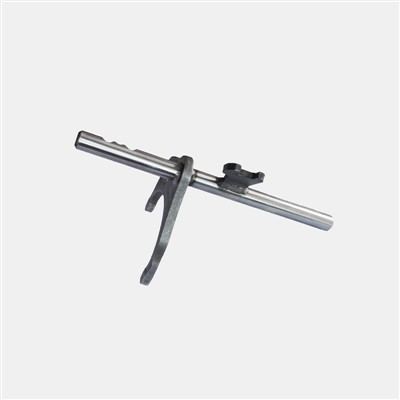
So putting this all together, what’s the short answer? Most basic transmission parts (seals, filters, small solenoids) are $10 to $100. Mid-size parts (sensors, standard solenoids, small planetary gears) are $100 to $500. Big, internal parts (clutch packs, heavy-duty planetary gears, solenoid packs) are $500 to $2,000+ for rare or performance parts. The key is knowing what you need, where to get it, and not just chasing the lowest price—because that’s where mistakes happen.
Precision Disc Parts Machining At the end of the day, transmission parts are an investment. Your transmission is the reason your car moves, so cutting corners here isn’t worth it. If you’re not sure what part you need, or you want to compare prices on quality parts, hit me up. I’ve been in this game for years, I know every part, every make and model, and I’ll help you get the right part at a fair price—no pressure, no jargon, just straight talk.
References
- Automotive Aftermarket Suppliers Association. Transmission Parts Cost & Quality Report. 2023.
- Bureau of Labor Statistics. Price Index for Motor Vehicle Parts Manufacturing. 2024.
- Transmission Repair Industry Association. Guide to Transmission Component Pricing. 2022.
Taizhou Liuhuan Machinery Co., Ltd.
As one of the most professional transmission parts manufacturers and suppliers in China, we’re featured by quality products and good service. Please rest assured to buy customized transmission parts made in China here from our factory. For quotation, contact us now.
Address: Xinyuan Industrial Zone, Damaiyu Street, Yuhuan City, Zhejiang Province,China
E-mail: tzlhmachining@gmail.com
WebSite: https://www.tzlhmachining.com/
